A live, group-based tutoring marketplace making expert instruction as affordable as a coffee — for every human being on the planet.
Looking to invest? View the opportunity →A Father's Frustration.
A Global Injustice.
"My son wanted to learn Python. I found a local tutor charging $75 per class and the full course needed more than 26 sessions. That is $1,950+ just for one subject."
— Nimeash Patell, Founder · Dollar A LessonTraditional 1-on-1 Is Broken for Both Sides
One tutor, one student, one premium hourly rate — pricing out learners at every age and capping what tutors can earn.
Recorded Courses Don't Solve It Either
Platforms like Udemy offer cheap content — but it's pre-recorded, impersonal, and has 90%+ dropout rates because there's no live interaction.
What Learning Looks Like
For $1
Learning Has No Age Limit.
From Sign-Up to Your First Class — In Minutes.
Find a Class
Browse 100+ subjects, pick a live session that fits your schedule — every class is $1.
Join Live
From any device. Real-time video, chat, whiteboard, and live Q&A.
Learn & Return
Save favorite tutors, track progress, access recordings — then come back for $1 anytime.
People Spend Hours on Screens.
But Not Learning Anything.
Social media dominates device time across every age group — not because people don't want to grow, but because affordable, live, expert instruction was never available to them. Until now.
Datareportal 2024 · Global averages
Built in Public. Growing Fast.
From pre-launch today to a global platform with AI tools, mobile apps, and enterprise partnerships.
View the Full Roadmap →Ready to be part of this from day one?
Simple for Students.
Lucrative for Tutors.
Dollar A Lesson runs on a 1-to-many live model — one tutor, one session, hundreds or thousands of students, each paying $1.
One Expert. One Session.
The Whole World Watching.
Book, Join, Learn.
Browse & Book
Search by subject, age group, language, or skill level. Every live class costs $1.
Join the Live Session
Real-time video, interactive whiteboards, polls, and live Q&A with AI translation.
Track & Return
Save favorite tutors, get recommendations, and access recordings.
Apply, Teach, Get Paid.
Apply & Get Verified
Submit your background and subject expertise. We run identity and credential verification.
Schedule Live Classes
Set your own schedule and topics. Promote through the platform's discovery feed.
Get Paid By Volume
Revenue share scales by class size — from 85% at small sessions down to 60% at 10,000+ students.
12 Categories.
One Platform. One Dollar.
Teach Once.
Reach Thousands.
Join a global platform where your expertise reaches thousands of students — all paying $1 each.
Takes less than 60 seconds. No spam.
Be First In Line
For $1 Classes.
Get priority access when we launch in Q3 2026. No spam — just your invite when classes open.
Takes less than 60 seconds. No spam.
What's Built.
What's Coming.
From pre-launch today to a global platform with AI tools, mobile apps, and enterprise partnerships.
Built by People
Who Lived the Problem.
Not a boardroom idea. A father who couldn't afford a $75 class for his son — and had the skills to fix it for the entire world.
Experience Earned.
Not Read From a Book.
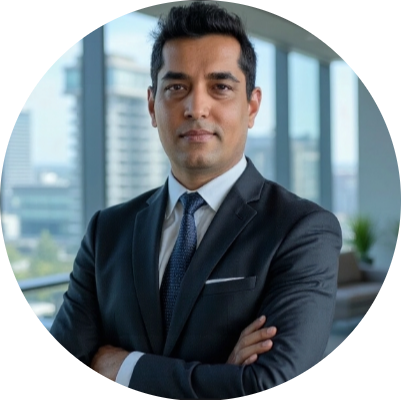
Nimeash built Dollar A Lesson from a real moment — not a whiteboard session. When his son wanted to learn Python and the cheapest option was $75 per class, he didn't just feel the problem. He understood exactly what was broken and had the skills to fix it at global scale.
A graduate of Accounting, Auditing, and Information Technology, his real education happened after the degree. He founded Patel Stock Trading, a trader education platform helping everyday people become smarter, more profitable market participants. He is an active investor and futures trader who has sat on both sides of the investment table — as founder and as investor.
Every skill Dollar A Lesson needs to win — marketing, conversion, brand building, technology, financial discipline — Nimeash has already deployed in live businesses. Not in theory.

Ayann Patel is nine years old — and he may be the most powerful proof of concept Dollar A Lesson has. At four, he became fascinated with financial markets. By nine, he had designed, built, and launched a free online course — Trading Made Simple for Young Minds — teaching children how money works, completely free.
His story was covered by national and international media. Ayann is not a figurehead — he is the mission made visible. On Dollar A Lesson, he will teach his own financial literacy course, making him one of the platform's founding tutors.
Every Domain Dollar A Lesson
Needs to Win — Already in the Room.
The Right People.
Coming Together Fast.
A $152B Market.
A $2.5M Seed Round.
Dollar A Lesson is raising a $2.5M seed round to build the platform, launch in priority markets, and establish the category.
Seed Round — $2.5M
How We'll Deploy $2.5M
Ready to talk?
Book a 15-minute call directly — no back-and-forth required.